MistNovel - Read Web Novel Stories & Fiction Online



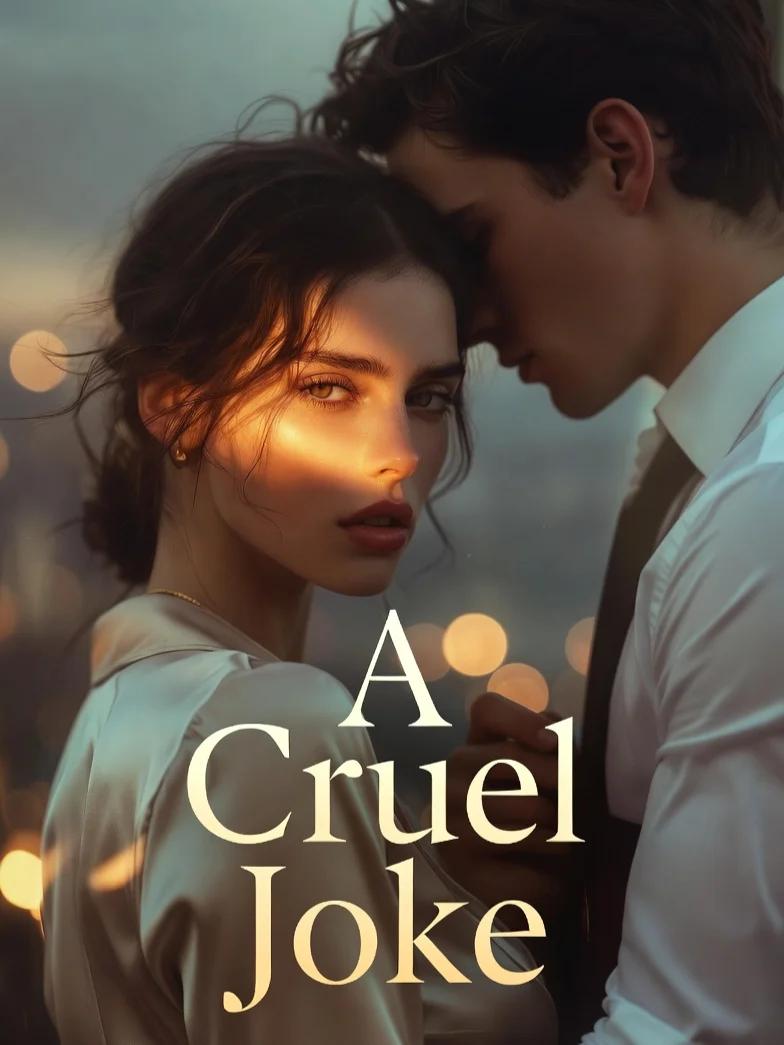
A Cruel Joke
 Author: Emily Rivera
 Status: Completed
Language: English
 Genre: Romance
192.7K
View
10K
Words
Add to library
Overview
Chapter List
Synopsis
Chapter 1 - A Cruel Joke
The boardroom stretched before me, a cathedral of corporate power built from glass, steel, and the type of silence that costs millions to achieve. I sat in the leather chair my father had occupied for thirty years, a space that felt hollow without him. Three lawyers in identical charcoal suits flanked the head of the table, their expressions impassive as they prepared to read Alistair Whitmore’s last will.
I had spent twenty-seven years preparing for this moment. My childhood consisted of board meetings instead of playgrounds and quarterly reports instead of bedtime stories. Father groomed me to be his successor, teaching me to read balance sheets before I could properly read novels. I believed every decision he made had shaped me for this role.
The lead attorney cleared his throat. “Miss Whitmore, your father's wishes were quite specific.”
A subtle shift in his tone made my spine straighten. Around the table, executives fidgeted. I caught a fleeting glance between our COO, Richard Hartley, and another director, a shared look that confirmed they already knew what was coming. The air grew thick with anticipation.
“Your father has left the entirety of Whitmore Industries, including all assets, properties, and controlling interests, to his eldest child and only son, Rhys Whitmore.”
The words struck me with physical force. Son. Eldest child. I had been an only child my entire life. The room seemed to tilt as a metallic taste flooded my mouth. I gripped the polished wood armrests to steady myself, the silence in my ears now a deafening roar.
“There must be some mistake,” I said. My voice emerged steady, a small victory I clung to.
“There is no mistake, Miss Whitmore.” The lawyer’s gaze was flat. “Your half-brother has been contacted. In fact, he is waiting outside.”
They brought him in before I could process the magnitude of my loss. He was tall and broad-shouldered, moving with an easy confidence that suggested he had never doubted his place in the world. His eyes were grey, like father’s, and his disarming smile did not waver as he crossed the room toward me.
“Sloane,” he said, extending a hand. “I wish we were meeting under better circumstances.”
I ignored his hand. I studied him with the analytical eye my father had trained me to use, noting the expensive but not custom suit and the tasteful but not ostentatious watch. Everything about him screamed meticulous calculation.
“Where have you been hiding for the past thirty years?” My voice was cold enough to frost the windows.
“Australia, mostly. Mother preferred the distance.” His story came smoothly, almost too smoothly. “Father and I reconnected about five years ago. He wanted to keep it quiet until…”
“Until he was dead and could not face me himself.” I stood, gathering my composure like armor. “This meeting is over.”
The lawyers began to protest, citing procedures and protocols, but I was already moving toward the door. Rhys caught up with me in the hallway, his touch gentle on my arm.
“Sloane, please. This is not what you think.”
I pulled my arm away and turned to face him. Up close, I could see flecks of gold in his grey eyes and a slight crook in his nose that suggested it had once been broken. He was handsome in a way that felt almost weaponized.
He’s a fraud, I thought, the certainty hardening my resolve. And I will prove it.
“What I think,” I said quietly, “is that you are a con artist. I do not know what game you are playing or how you convinced my father to write that will, but I will subject you to a level of legal and financial scrutiny that will make you wish you had never heard the name Whitmore. When I am done, everything you just stole from me will come back where it belongs.”
His expression shifted, something dark and unreadable flickering across his features. “Your father was a labyrinthine man, Sloane. Nothing about this is simple.”
“Then I will make it simple. Stay away from my company.”
I walked away without looking back, already planning my next move. The game had begun, though I did not yet understand the rules my father had set.
Latest chapter
Chapter 1 - A Cruel Joke
Free
Last Update: 2026.01.26
Genre: Romance
Chapter 2 - The Ghost in the Machine
Free
Last Update: 2026.01.26
Genre: Romance
Chapter 3 - The First Strategy Session
Free
Last Update: 2026.01.26
Genre: Romance
Chapter 4 - Partners in Deceit
Free
Last Update: 2026.01.26
Genre: Romance
Chapter 5 - The Hostile Takeover
Free
Last Update: 2026.01.26
Genre: Romance
Chapter 6 - The Inevitable Confession
Free
Last Update: 2026.01.26
Genre: Romance
You May Also Like
More

Blood Tied Hearts
By @Michelle Kelly
9.3
447.7K

The Wife Next Door
By @Kenneth G. Watson
9.4
244.3K

Blood That Walks in My Skin
By @Dorothy Z. Mendoza
9.5
471K

The Wedding Was for Me
By @Kevin Patel Jr.
9.5
471K
He Killed His Son to Claim Me
By @Carol Johnson
9
120.3K
Our Hate is a Mating Curse
By @Brian E. Rodriguez
9
120.2K
.webp&w=3840&q=75)
His Soul to Scribe
By @Amanda X. Thomas
9
120.2K

The Demon Prince Tasted Me Before Dessert
By @Melissa Robinson
9
120.4K

The Dream-Walker's Keeper
By @Timothy A. Cook
9
120.1K

Crowned in His Ruin
By @Timothy A. Cook
9
120.1K
New Release Novels
More

One Night with the Alpha
By @Raymond Collins
9.9
328K
My High School Bully Stole My Identity and Threw Her Wedding at My Villa
By @Ceren
9.5
316.5K

An Invitation to My Wedding
By @Kimberly D. Young
9.5
148.9K

A Soul for a Body
By @Joshua Gutierrez Jr.
9.7
192.4K

The Love Story She Wrote
By @Kenneth G. Watson
9.9
186.5K

The Ghostwriter's Clause
By @Dorothy Z. Mendoza
10
143.1K

His Best Friend's Hands
By @Kevin Patel Jr.
9.5
148.9K

The Language of Our Scars
By @Carol Johnson
9.6
201.1K
I Dumped the Vampire King Thirteen Times
By @George Thompson Jr.
9
120.2K
The Villainess Rewrites Her Ending
By @Janet Rogers-Scott
10
444.8K
Related Novels
More
Beneath His Defenses
By @Misteria
9.9
270.2K

Possession Under Blackwood's Gaze
By @Misteria
9.6
322.7K

The Jester's Zero
By @Misteria
9.7
186.3K

When Your Quiet Life Becomes His Empire
By @Misteria
9.9
218.5K

Innocent Lila and the Man Who Planned Her Ruin
By @Misteria
9.6
198.5K
How to Survive Your Boss's Dangerous Obsession
By @Misteria
9.7
250K
His Alpha-shame Revealed
By @Misteria
9.7
299.5K

Destiny Reforged
By @Misteria
9.8
471.8K

The Wulf Doc
By @Misteria
9.9
332.3K
Luna's Second Kismet
By @Misteria
9.9
131K
Comment
No comment

Explore and enjoy great stories for free on MistNovel
Get unlimited access to thousands of captivating novels
enjoy endless reading anytime, anywhere!





scan code to read on app